Orders and prepayment
The goods are not here yet, but the money is already taken: a security deposit, the purchase from the supplier and the deposit applied at handover.
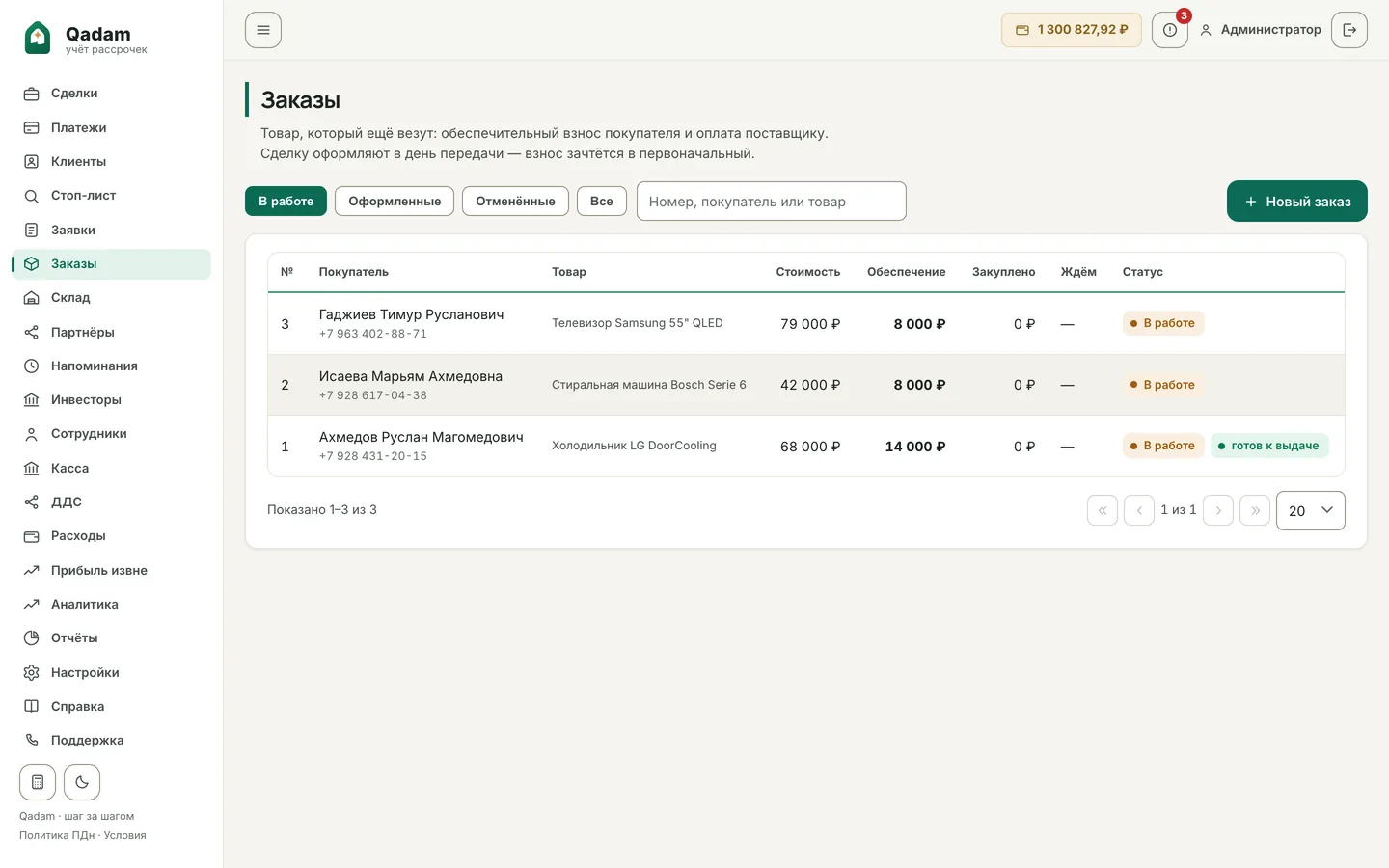
An ordinary deal is born together with the goods. But it often goes differently: the buyer has agreed, paid a security deposit, and the goods are on their way from the supplier. This gap usually does not exist in the accounting at all — the money is in the cash desk, but there is no deal yet to put it against.
An order closes this gap: the deposit is taken into the cash desk as a deposit on the order, the purchase from the supplier is recorded as an expense, and at handover the order turns into a deal and the deposit is applied as the down payment.
If the buyer changes their mind — a refund with a withholding, by your rules, and all of it stays in the cash desk journal.
What exactly it does
- A security deposit before the goods arrive
- The purchase from the supplier as an expense
- Turn the order into a deal with the deposit applied
- A refund with a withholding
- A QR code to pay the deposit
Related features
14 days of full access. No card needed.
Try Qadam